 Chatgpt Grow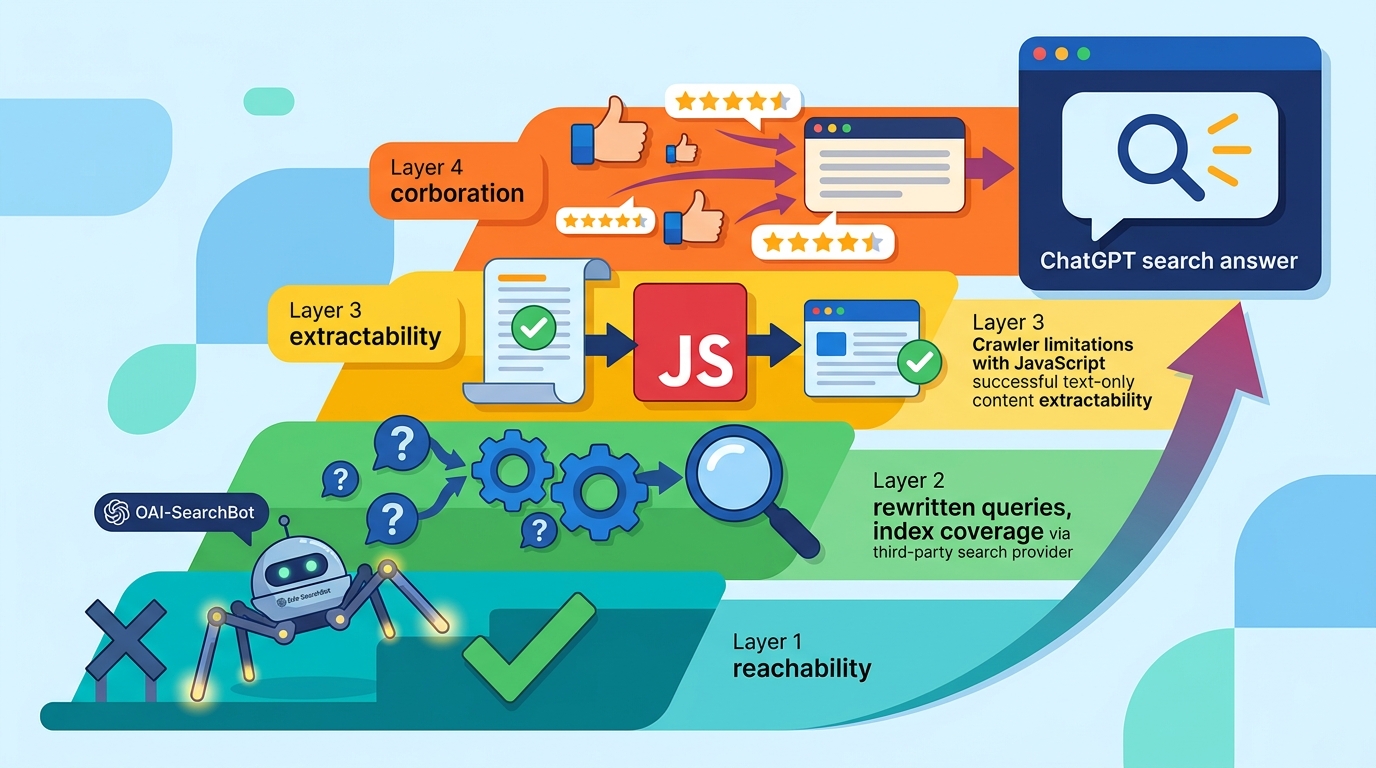
Why Your Website Is Not Showing Up in ChatGPT (And How to Diagnose It in Order)
There are four separate layers between your page and a ChatGPT answer. Most site owners check none of them, or check them in the wrong order. Here is the sequence, with the official documentation behind each step.
September 29, 2026 · 10 min read
By Alex Li, Founder · Contact the author
There are four separate layers between your page and a ChatGPT answer. Each one can fail independently, each has a different fix, and the failures look identical from the outside: you ask ChatGPT about your category, and your name is not there.
The short version
- The question is not "is my SEO good." It is "at which of four layers did this break."
- Layer 1 — reachability. OpenAI's
OAI-SearchBotdecides whether pages can appear in ChatGPT search answers. We audited 267 sites: 6.4% of a general sample block it, and 0% of AI-visibility vendors do. - Layer 2 — index coverage. OpenAI documents that ChatGPT search sends rewritten queries to "third-party search providers." Ranking first on Google does not transfer, because the query that reaches the provider is not the query your customer typed.
- Layer 3 — extractability. Vercel and MERJ measured AI crawler behaviour at scale and found they do not execute JavaScript. If your content only exists after client-side rendering, it does not exist to these crawlers.
- Layer 4 — corroboration. Even a perfectly reachable, indexed, extractable page gets skipped if nothing outside your domain says you belong in the answer.
The four layers, in diagnostic order
The order matters because the layers are sequential. A page that fails Layer 1 cannot be rescued by Layer 3 work. Most "why isn't ChatGPT mentioning me" advice starts at Layer 3 or 4 — writing style, schema, entity optimisation — while Layer 1 is broken and nothing downstream can possibly matter.
| Layer | The question | How to test it | Typical fix |
|---|---|---|---|
| 1. Reachability | Can OpenAI's crawlers fetch your pages? | Fetch /robots.txt, look for OAI-SearchBot | Remove the Disallow for OAI-SearchBot |
| 2. Index coverage | Are your pages in the index the search layer queries? | Search a distinctive sentence from the page in a search engine | Get pages indexed; do not rely on Google alone |
| 3. Extractability | Is your answer in the raw HTML? | curl the URL and grep for your answer text | Server-render the content, or ship it as static HTML |
| 4. Corroboration | Do other sources associate you with the topic? | Ask ChatGPT the buyer question; see who it names | Earn mentions on the sources it already trusts |
Layer 1: can the crawler reach you?
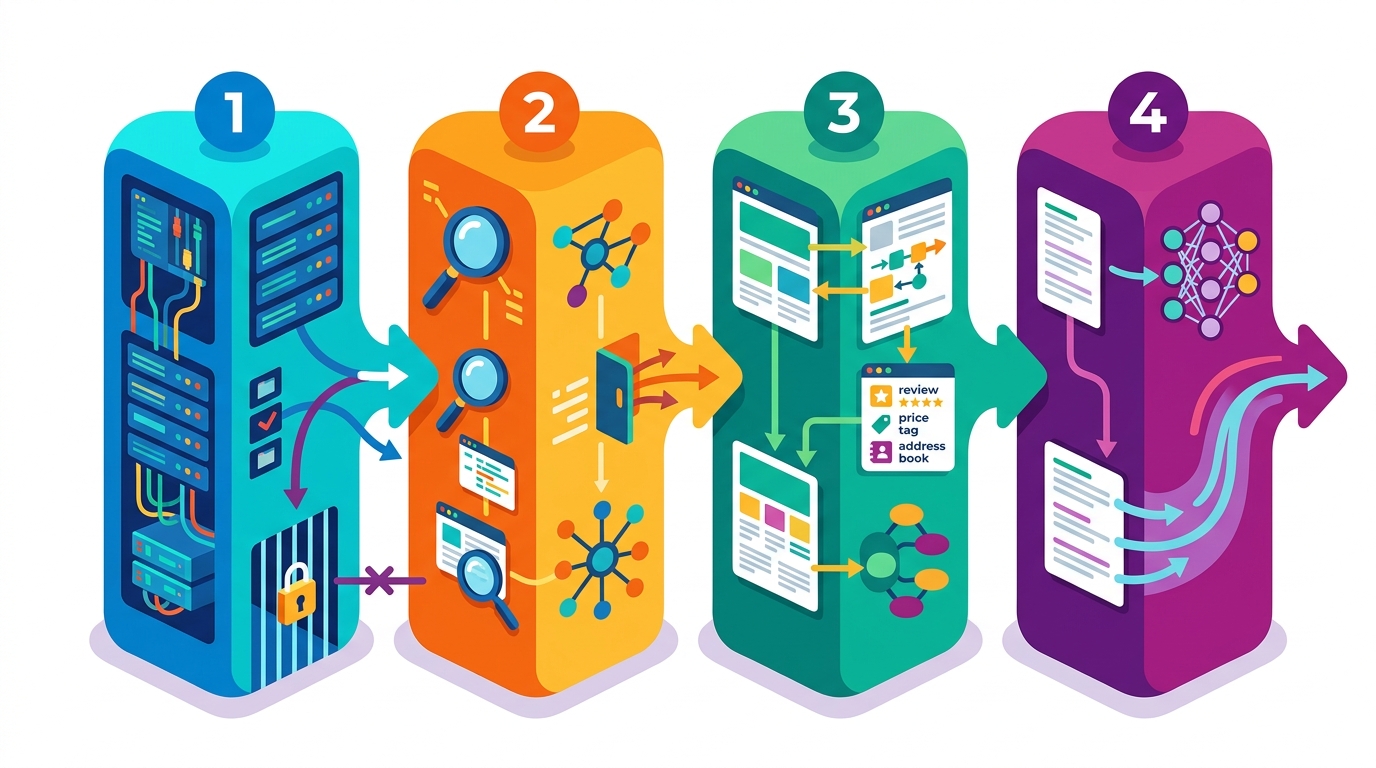
OpenAI runs four crawlers, and only one of them governs whether your site can appear in ChatGPT search answers. From OpenAI's official crawler documentation:
"OAI-SearchBot is for search. OAI-SearchBot is used to surface websites in search results in ChatGPT's search features. Sites that are opted out of OAI-SearchBot will not be shown in ChatGPT search answers, though can still appear as navigational links."
The other three — GPTBot (training), ChatGPT-User (user-initiated), and OAI-AdsBot (ad landing-page validation) — are separate settings. This distinction is covered in detail in our audit of how 267 real sites handle these crawlers; the headline for this article is that 6.4% of a random sample of general websites block OAI-SearchBot, which removes them from ChatGPT search answers entirely. Not one of the 57 AI-visibility vendors we checked does.
Two practical checks. First, a User-agent: * block with Disallow: / blocks every crawler at once — the most common way to lose visibility without writing a single AI-related rule. Second, OpenAI documents a roughly 24-hour delay: "it can take ~24 hours from a site's robots.txt update for our systems to adjust." If you fixed it this morning, test tomorrow.
Layer 2: are you in the index ChatGPT actually queries?
This is the layer where the most confident wrong advice lives, and OpenAI's own wording is careful for a reason.
"To provide relevant responses to your questions, ChatGPT search sometimes partners with other search providers. When it does, ChatGPT search typically rewrites your query into one or more targeted queries that it sends those providers."
Three things follow from that sentence, all of them first-party.
It is a partner relationship, and OpenAI does not name the partner. The public help article says only "third-party search providers." The Enterprise and Edu documentation is more specific — it states that ChatGPT "may share disassociated search queries with the Bing search engine to return web results" — but the general-purpose documentation stays abstract. Any article telling you "ChatGPT uses Bing's index, full stop" is going beyond what OpenAI documents.
Your query gets rewritten before it is sent. This is the part that breaks the intuition people bring from SEO. You do not get visibility by ranking for the phrase your customer typed, because that phrase may never reach the provider. You get visibility by owning the rewritten queries — which are shorter, more topical, and closer to a category description than a natural question.
So Google rank is not a proxy. A page at position 1 on Google can be absent from ChatGPT's answer, and the reason is structural rather than a penalty. Coverage in the search layers ChatGPT queries is the precondition, and that is a different target than your Google position.
Layer 3: can the page be lifted cleanly?
Even a reachable, indexed page can be empty by the time the crawler reads it. Vercel and MERJ instrumented Vercel's edge — GPTBot alone generated roughly 569 million requests across their network in a month, with Anthropic's ClaudeBot at around 370 million, together about 20% of Googlebot's volume — and tested whether the major AI crawlers execute page JavaScript. Their finding:
"Most AI crawlers don't execute JavaScript... none of them render client-side content."
The study measured the bots fetching .js files and never running them. In SEOBRO's reading of the same data, the two exceptions are Google's Gemini, which rides Googlebot's rendering infrastructure, and AppleBot, which crawls with a browser-based agent. Everything else in the group — GPTBot, ChatGPT-User, OAI-SearchBot, ClaudeBot, PerplexityBot, meta-externalagent, Bytespider — reads the raw HTML response and stops.
The test takes ten seconds and does not require a tool:
curl -s https://yourdomain.com/your-page | grep -i "a distinctive sentence from your answer"
If that returns nothing, the crawler sees nothing either. A headless-browser preview in a browser extension will happily show you the rendered page and tell you it is fine, which is exactly why this layer is misdiagnosed — you are looking at the version a human sees, not the version the crawler receives.
Layer 4: does anything corroborate you?
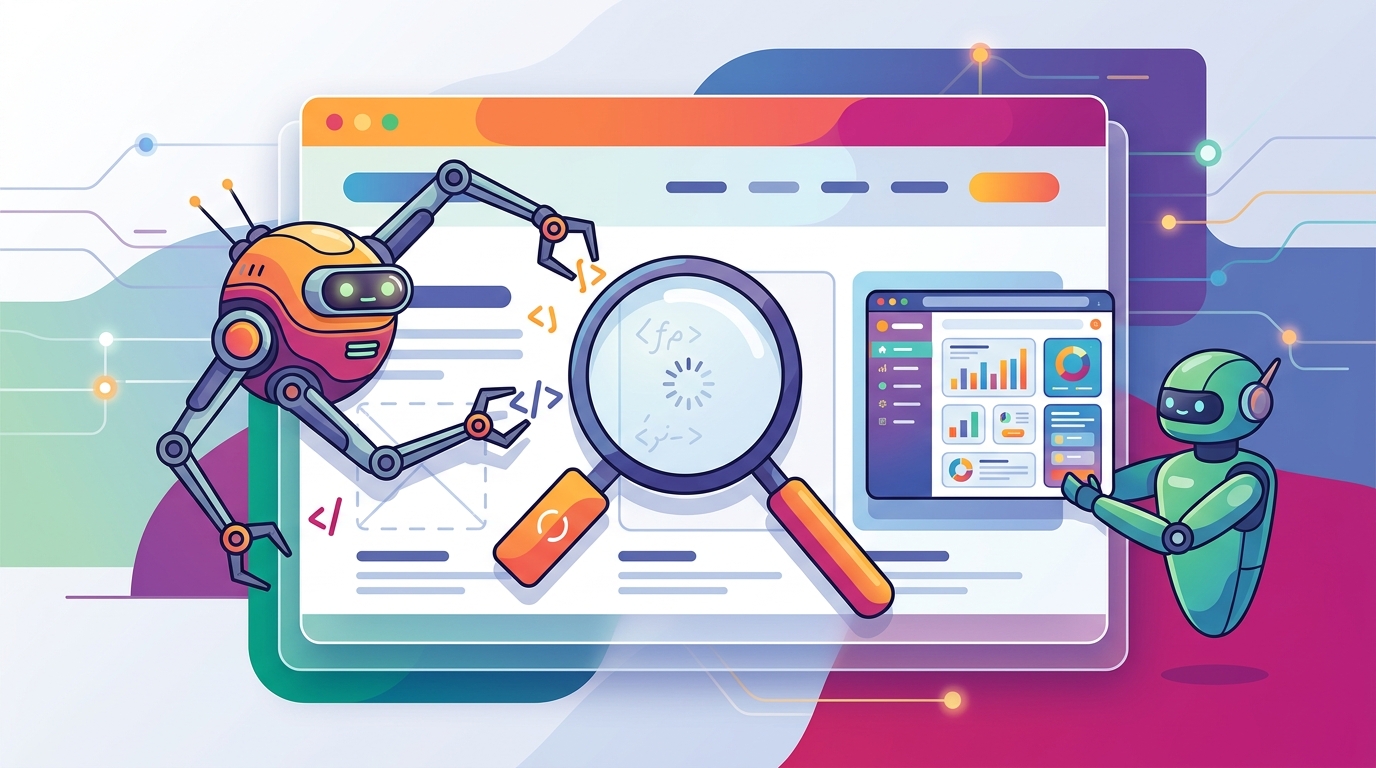
This is the layer with no official documentation, because it is not a switch — it is a property of the web around you. The relevant evidence is academic rather than vendor-authored: the KDD 2024 benchmark GEO: Generative Engine Optimization (arXiv 2311.09735) tested nine content modifications across 10,000 queries and found the top-performing methods were citing sources, adding quotations, and adding statistics — a relative improvement of 30–40% on their Position-Adjusted Word Count metric. Those are all forms of pointing outward to evidence, which is another way of saying: content that is corroborated travels further than content that asserts.
The practical version of this layer is a two-question test. Ask ChatGPT the buyer question in your category, in a fresh session. Then ask: whose names came back, and what do those names have that you do not? The usual answers are third-party mentions, comparison pages, or a named entity record — things that exist off your domain.
A blank result is not a zero
One measurement trap deserves its own section, because it makes people abandon working strategies.
Ask ChatGPT the same question twice and you can get two different brand lists. Answers vary by session, by whether web search triggers at all, and by tier — a free session answering from training data and a browsing session pulling live pages are answering from different sources entirely. A single blank result therefore tells you almost nothing. It is one sample from a distribution.
Diagnose with samples, not snapshots: run the same five buyer questions across at least three sessions each, and vary the prompt wording between runs. What you are looking for is a pattern — consistently absent, sometimes present, or present but described wrongly. Those three outcomes point at different layers, and only the first one suggests a Layer 1 or Layer 2 problem.
Frequently asked questions
Why is my website not showing up in ChatGPT even though I rank well on Google?
They are different retrieval paths. OpenAI documents that ChatGPT search sends rewritten queries to third-party search providers, so the query that reaches the provider is not necessarily your customer's phrasing, and Google position is not a precondition. Add to that the reachability layer: 6.4% of a random sample of general websites in our audit block OAI-SearchBot, the crawler OpenAI documents as governing whether a site appears in ChatGPT search answers.
Does ChatGPT use Bing's index? OpenAI's general help documentation says only that ChatGPT search "sometimes partners with other search providers." Its Enterprise and Edu documentation is more specific, stating that queries may be shared with the Bing search engine to return web results. OpenAI does not publish a complete list of providers, so treat "ChatGPT uses Bing" as partly documented rather than a full description of the retrieval stack.
Do AI crawlers run JavaScript?
The major ones do not. Vercel and MERJ instrumented Vercel's edge and found that AI crawlers fetch raw HTML without rendering client-side content; the documented exceptions are Google's Gemini (via Googlebot's rendering) and AppleBot (browser-based). Test it yourself with curl and grep for a distinctive sentence from the page.
Does blocking GPTBot stop ChatGPT from finding my site?
No. GPTBot collects content for training foundation models. OAI-SearchBot is the crawler OpenAI documents as deciding whether a site can appear in ChatGPT search answers, and OpenAI states the two settings are independent.
How long until ChatGPT notices a change I make? OpenAI documents roughly 24 hours for robots.txt changes: "it can take ~24 hours from a site's robots.txt update for our systems to adjust." Index and corroboration changes take considerably longer and are not on a documented timeline.
How do I check whether ChatGPT mentions my brand? Run five buyer-intent questions in your category, three sessions each, with varied wording. A single check is a snapshot, not a measurement — answers vary between sessions and between training-data answers and live-web answers.
The first thing to check is the cheapest
Layer 1 costs nothing to test and takes two minutes: open /robots.txt and look for OAI-SearchBot. Layer 3 costs one curl. Do those two before spending anything on content.
If both pass and you are still absent, the constraint is Layer 4, and that is the expensive one. Our free AI citeability checker tests whether a page can be lifted cleanly — the structural half of Layer 3. Chatgpt Grow is built for the corroboration half: a customer question turned into original research and a published article, one a day, on autopilot.
Sources and method. Crawler semantics: OpenAI's official crawler documentation (developers.openai.com/api/docs/bots). Retrieval description: OpenAI Help Center, "Searching the web with ChatGPT" and "ChatGPT search for Enterprise and Edu." JavaScript finding: Vercel and MERJ, "The rise of the AI crawler." Citation benchmark: Aggarwal et al., GEO: Generative Engine Optimization, KDD 2024 (arXiv 2311.09735). Reachability figures are from our own audit of 267 domains, detailed in GPTBot vs OAI-SearchBot.