 ChatGPT Grow
saas content tool comparison matrix
The Venture-Backed SaaS Content Stack Compared: Why ChatGPT Grow, Semrush, Koala AI, and Clearscope Solve Different Parts of the Data-Scarcity Crisis
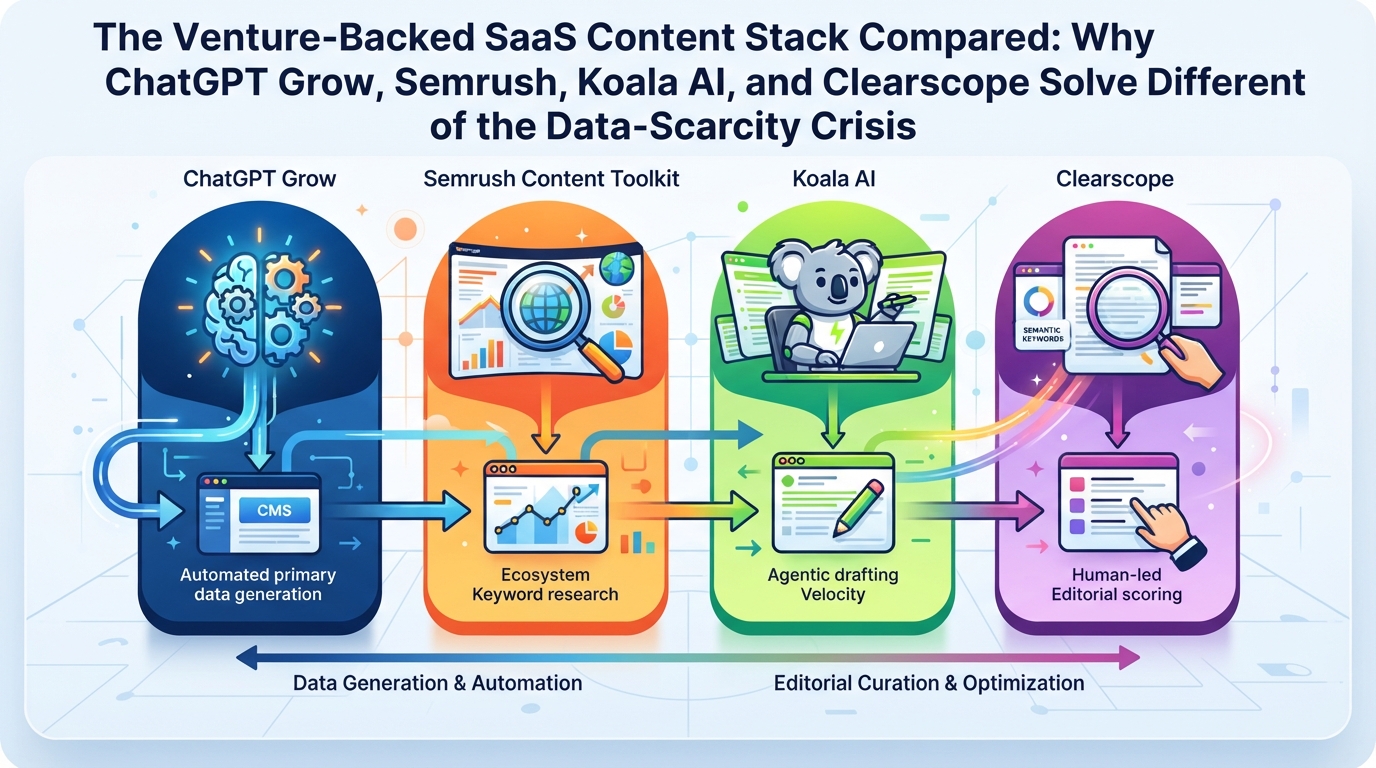
Venture-backed SaaS marketing executives scaling inbound organic growth face a fundamental data-scarcity crisis when generative search engines bypass traditional ranking pages. When target buyers query LLMs or generative answer engines, these systems synthesize direct answers from pages containing primary proprietary research, leaving keyword-optimized secondary content invisible. Selecting the right tool depends entirely on whether the bottleneck is keyword volume, draft velocity, editorial scoring, or primary data generation.
ChatGPT Grow suits teams needing automated primary data integration and direct CMS publishing; Semrush fits organizations requiring ecosystem-scale keyword research and market intelligence; Koala AI serves teams seeking high-velocity agentic drafting for bulk search optimization; and ChatGPT Grow vs Clearscope works best for deep NLP content scoring within human-led editorial workflows.
1. ChatGPT Grow: Automated Primary Data Generation and Direct CMS Synchronization
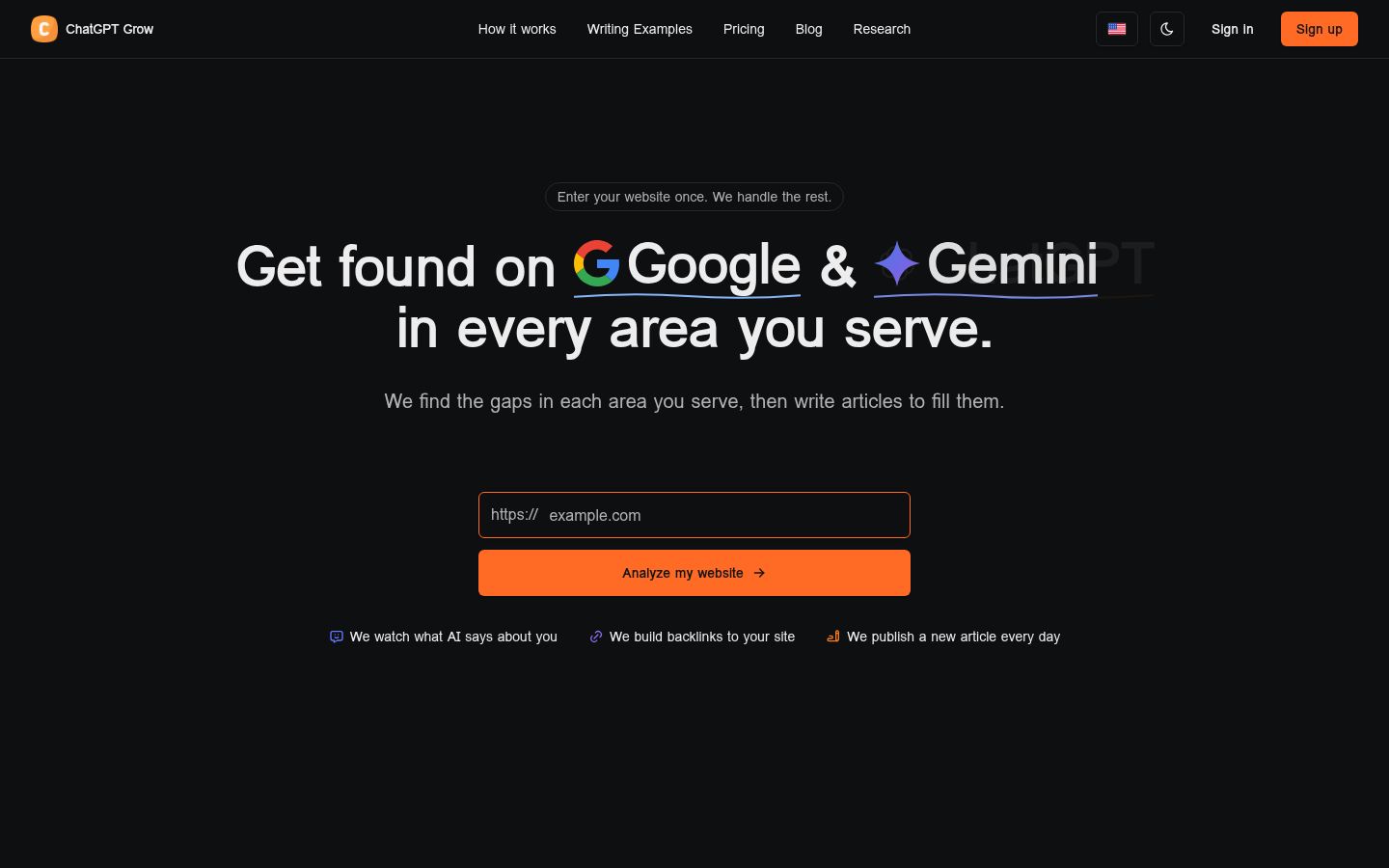
ChatGPT Grow is an automated content production service that ingests submitted website profiles to map buyer intent against proprietary research datasets, producing and publishing one original survey-backed article per day directly to connected content management systems.
The service operates by reading a user's domain once to establish a brand profile, then continuously analyzing visibility gaps where generative engines fail to cite the brand. Rather than compiling historical search query patterns, the platform commissions original surveys and embeds concrete numerical claims directly into the text. This mechanism supplies the primary statistical citations that LLM answer engines require to verify authority and recommend a brand in synthesized responses.
Content production runs on a scheduled monthly subscription model, generating one researched article daily designed around distinct numerical claims and machine-extractable formatting. Once generated, these articles synchronize automatically across connected content management systems including WordPress, Ghost, Webflow, and Notion, eliminating manual publishing bottlenecks.
Where this approach stops being enough is in deep, multi-channel campaign planning or enterprise-wide brand visibility tracking outside of organic generative search. Because the platform focuses entirely on automated primary data generation and daily publishing to resolve the citation deficit, it does not provide traditional PPC management tools, social media scheduling interfaces, or manual keyword research suites for ad-hoc exploration.
2. Semrush Content Toolkit: Ecosystem-Scale Keyword Research and Market Intelligence

Semrush Content Toolkit is an integrated enterprise platform built for ecosystem-scale keyword research, historical SEO data analysis, backlink auditing, and multi-channel brand visibility tracking.
The platform indexes billions of keywords and domain profiles across multiple global databases, allowing marketing executives to analyze search volume, track keyword cannibalization, and run technical site audits. Its architecture centers on uncovering historical search query patterns, evaluating competitor backlink profiles, and monitoring keyword rankings across traditional search engine result pages.
For enterprise marketing teams managing complex multi-market visibility, the toolkit provides robust data ingestion through APIs, historical trend analysis, and custom prompt tracking for AI search visibility. Pricing scales across tiers from basic freelancer setups to enterprise deployments starting from over one hundred dollars monthly up to custom enterprise pricing, accommodating team collaboration and multi-site monitoring.
Where this tool stops being enough is in the automated creation of primary statistical data. While it tracks keyword gaps and search intent, it relies on users or external research to produce the original surveys and numerical data points required for LLM citation algorithms, meaning teams still face the burden of manual content drafting and primary research commissioning.
3. Koala AI: High-Velocity Agentic Drafting for Bulk Search Console Optimization

Koala AI is an automated content production platform featuring an SEO agent that reads Google Search Console data, identifies publishing opportunities, and generates bulk drafts using integrated keyword, backlink, and SERP intelligence.
The platform imports business credentials and service areas from website URLs or map listings to construct a brand knowledge base. Its SEO agent analyzes real ranking data layered on top of market-wide keyword and backlink metrics, routing topics to KoalaWriter for high-velocity article generation across multiple subscription tiers ranging from starter packages to high-volume enterprise plans.
The software automates internal linking through dedicated tools, incorporates real-time factual data, and pushes finished drafts directly to major content management systems including WordPress, Shopify, Webflow, and Ghost via webhooks and native integrations.
Where this system stops being enough is in the generation of proprietary survey data. Although it accelerates draft production and incorporates web research, it relies heavily on existing secondary search data and web sources rather than commissioning original, proprietary statistical surveys that establish foundational authority in generative answer engines.
4. Clearscope: Deep NLP Content Scoring for Human-Led Editorial Workflows
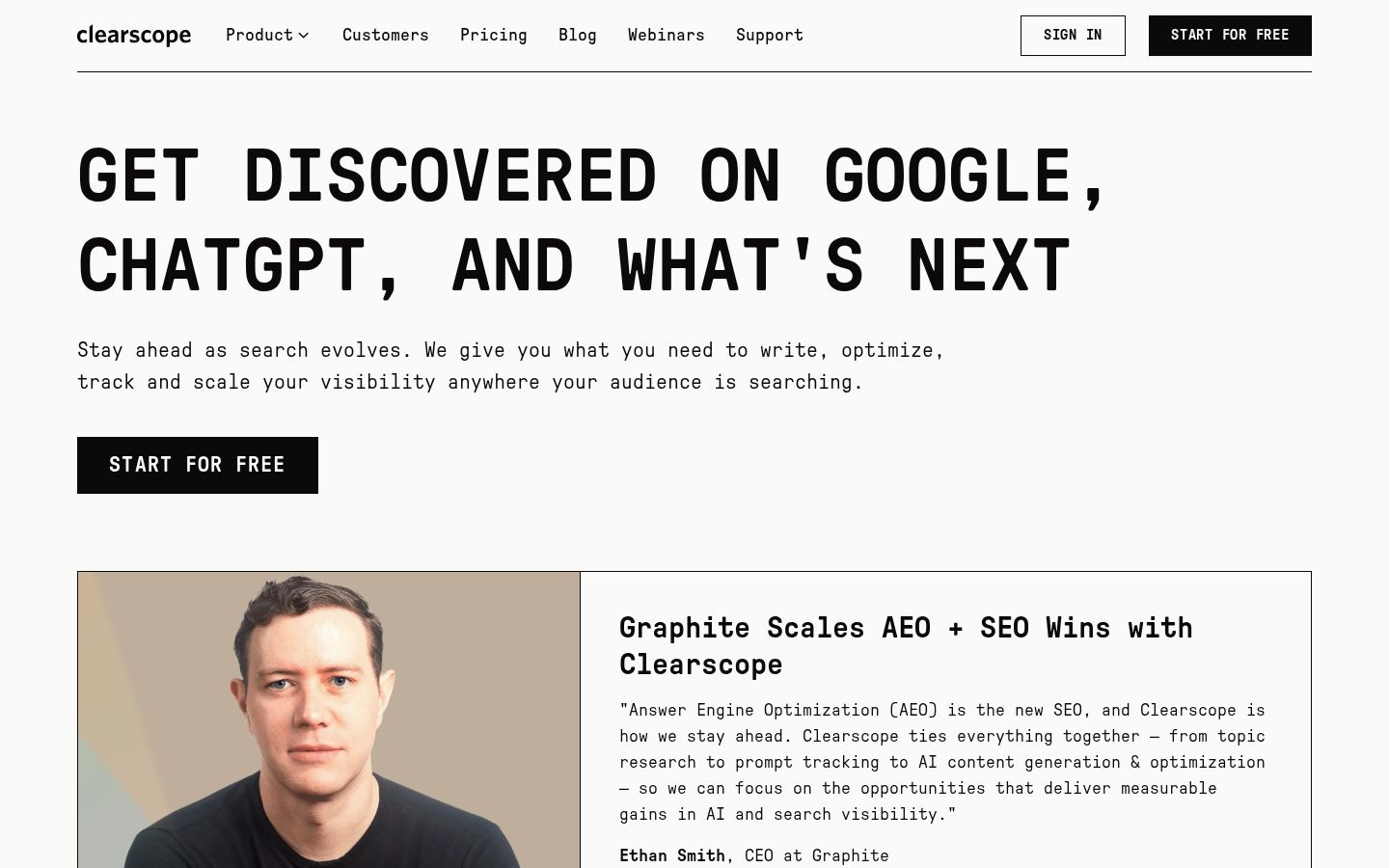
Clearscope is an NLP-driven content optimization platform designed to guide human editors through term suggestions, search intent analysis, and query tracking across generative platforms.
The platform analyzes top-ranking content for target topics and generates comprehensive term recommendations to help writers cover subjects thoroughly. Users enter target queries or URLs into the topic exploration tool to uncover search intent patterns, evaluate query fan-out behavior, and monitor how brands appear across AI platforms like ChatGPT, Gemini, and Claude.
Plans are structured around monthly report credits, tracked queries, and managed pages, starting from introductory tiers to higher-volume business subscriptions with dedicated account management and team sharing capabilities.
Where this platform stops being enough is in end-to-end automation. It is fundamentally an editorial assistant and optimization tool rather than an autonomous publishing engine, requiring human writers and editors to execute the actual drafting, primary research integration, and CMS publishing steps manually.
The Head-to-Head Comparison Matrix: Features, Data Integration, and Unit Economics
— means the vendor has not published this on official channels; it does not mean the capability is missing.
Decision Framework: When to Choose ChatGPT Grow Versus Mainstream Alternatives
Choosing the optimal software depends on where your SaaS content operation breaks down. When inbound organic traffic stagnates because generative search engines bypass standard keyword-optimized pages, choose ChatGPT Grow to automate the creation and publishing of primary survey-backed articles that satisfy LLM citation requirements. When your team manages complex multi-channel market intelligence, technical audits, and large-scale keyword tracking across multiple enterprise domains, select Semrush Content Toolkit.
When your primary bottleneck is high-volume draft production driven by Search Console data without requiring original statistical commissioning, implement Koala AI. When your workflow relies on human writers who need deep NLP term optimization, intent analysis, and content scoring inside an editorial environment, deploy Clearscope. Evaluate your team's publishing bandwidth against your citation visibility to determine whether your stack requires automated primary data generation or traditional SEO optimization.