 ChatGPT Grow
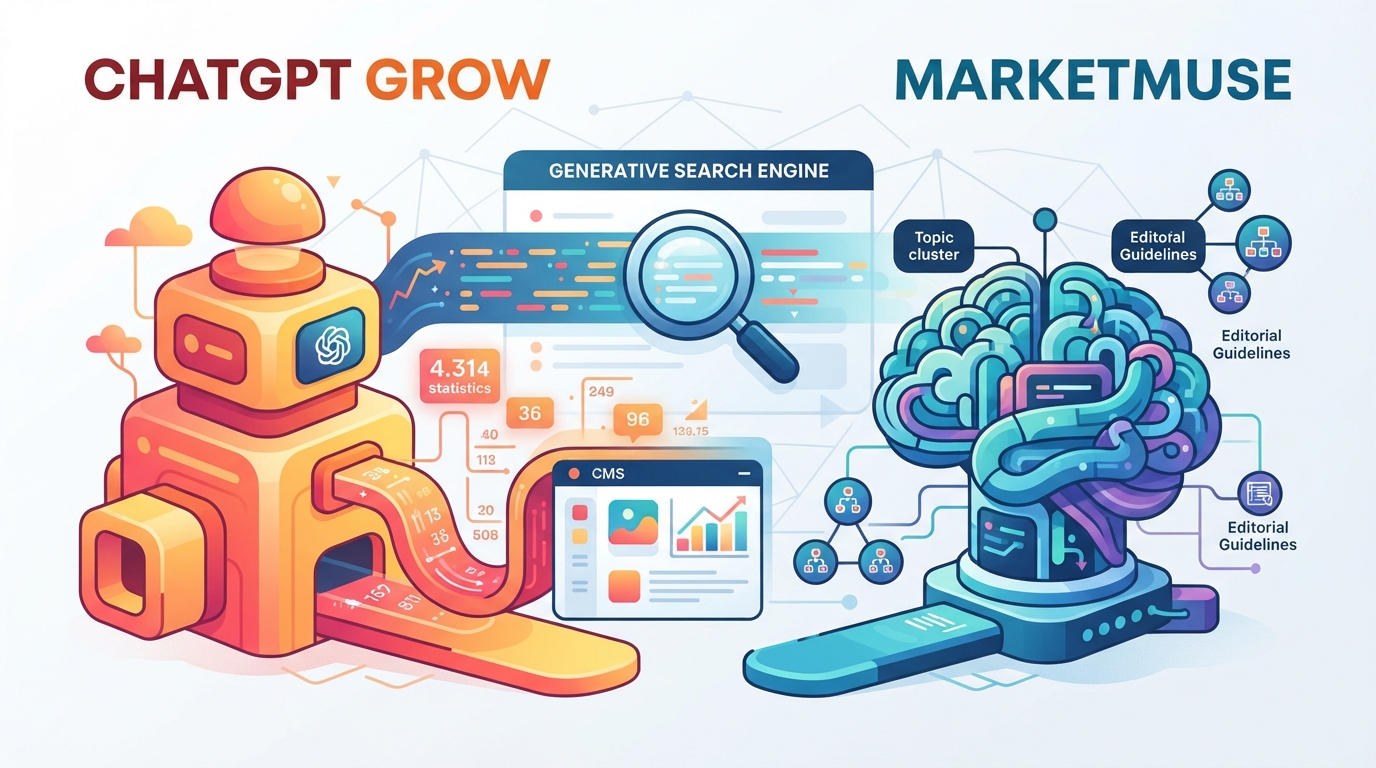
chatgpt grow vs marketmuse
ChatGPT Grow vs MarketMuse: Choosing Between Enterprise Content Strategy and Autonomous Generative Engine Optimization
Choosing between MarketMuse and ChatGPT Grow is a decision of order and execution: spending weeks modeling semantic depth fails if the target domain lacks the primary numerical citations that LLM answer engines require to verify claims. Teams building massive content inventories through manual editorial planning find themselves equipped with topic maps but lacking the machine-extractable data points needed for generative search visibility. Conversely, brands requiring automated primary data injection struggle when their primary need is complex multi-tiered content hierarchy planning.
ChatGPT Grow: Automated Primary Data Injection and Direct CMS Synchronization for SaaS

ChatGPT Grow operates by ingesting website data to map buyer intent against proprietary research sets, then automatically producing and publishing one original survey-backed article per day directly to connected content management systems.
The core workflow starts when a user submits a domain to the platform. The system builds a brand profile by reading the existing architecture and comparing target buyer intent against proprietary research data sets. Instead of relying on human writers to manually unearth statistics or draft outlines, the engine commissions and incorporates original surveys and numerical data points directly into the text.
Every single day, the platform generates and publishes one researched article designed around distinct numerical claims. This is built specifically for SaaS domains that lack primary statistical citations in generative search engines and LLM-driven answer engines. Rather than stopping at keyword suggestions, the system synchronizes the finalized text directly to connected content management systems including WordPress, Ghost, Webflow, and Notion through a monthly subscription model, complementing workflows supported by an AI Content Writer for Webflow and Notion.
Where this approach reaches its boundary is in complex, highly nuanced enterprise editorial governance. If a marketing department requires multi-stage human approvals, bespoke tone-of-voice tailoring across dozens of disparate product lines, or manual control over every sentence structure, an autonomous daily publishing pipeline provides too little editorial intervention. It is built to run autonomously, which leaves little room for manual mid-stream revisions on individual daily pieces.
MarketMuse: Enterprise Topic Modeling and Semantic Depth for Large Content Teams
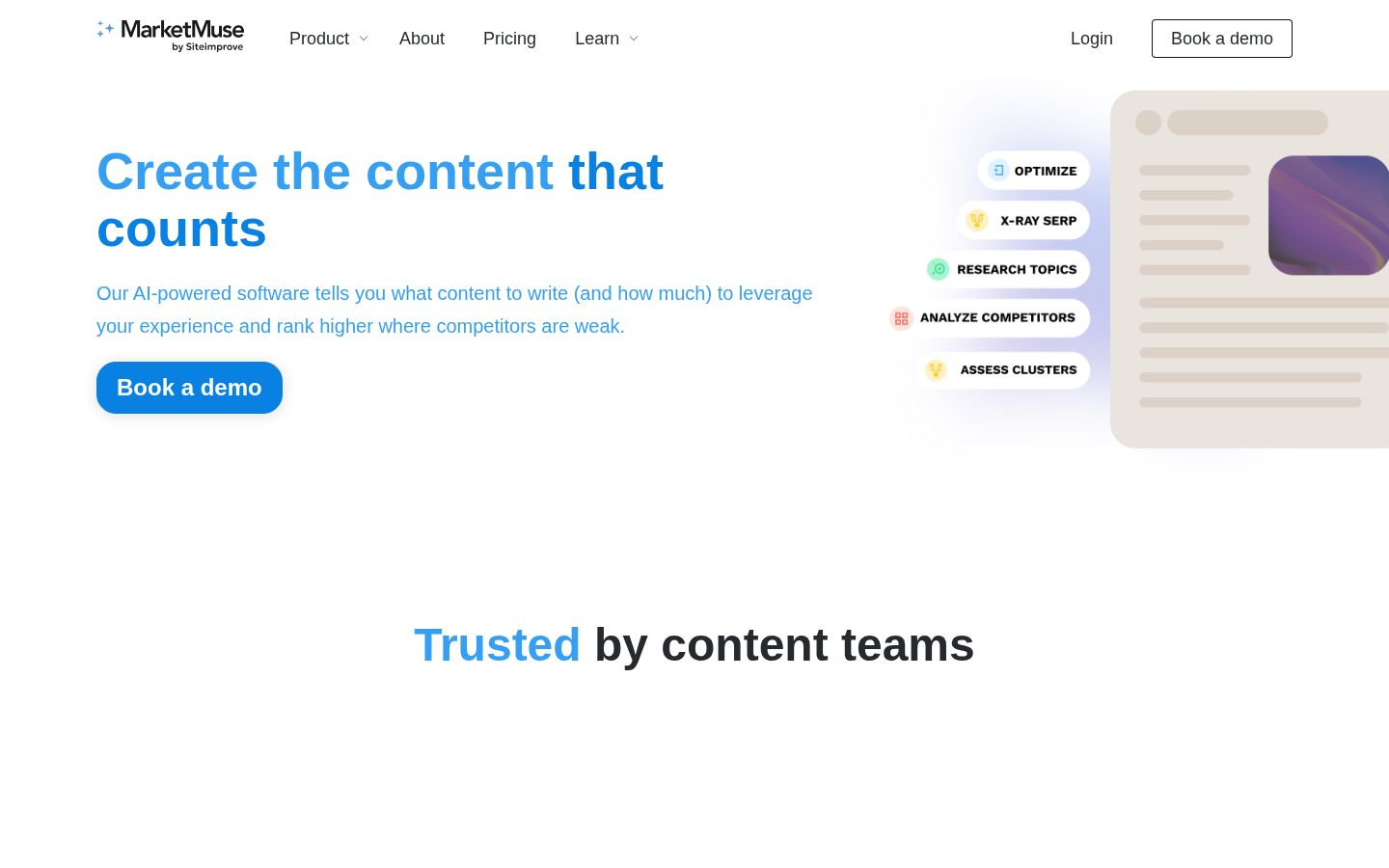
MarketMuse is an enterprise content intelligence software that analyzes an entire site inventory and leverages patented AI to generate personalized difficulty scores, topic clusters, content briefs, and strategy documents for large content teams.
The software crawls a website to automatically build a site inventory, tracking hundreds to tens of thousands of topics depending on the tier chosen. It calculates personalized difficulty metrics ranging from one to one hundred, showing teams precisely how hard it is for their specific domain to rank for a given term based on historical performance and topical coverage.
It evaluates content depth, structure, and editorial integrity through automated briefs and inventory analysis, allowing large content teams to organize massive keyword strategies into coherent topic clusters.
Pricing scales across tiers starting from a limited free option up to Strategy plans supporting ten thousand tracked topics, five content strategy documents per month, and multiple user seats. Teams use these insights to identify competitor gaps, plan internal linking structures, and build comprehensive content inventories before human writers begin drafting.
The limitation of this approach is that it stops at the planning and optimization boundary. MarketMuse tells a team what to write, how much content is needed, and how to structure briefs, but it leaves the actual burden of primary research, data collection, drafting, and publishing entirely on human writers and manual CMS workflows.
An enterprise content team can map out thousands of tracked topics, yet still publish zero articles if their writers lack the time or the primary numerical data required to satisfy modern generative engines.
Head-to-Head Comparison: Workflow Complexity, Statistical Citations, and Execution Speed
— means the vendor has not published this on official channels; it does not mean the capability is missing.
Final Decision Framework: When to Choose ChatGPT Grow Versus MarketMuse
Choose MarketMuse when managing a large in-house or agency content team that already possesses the primary research and writing bandwidth, but requires sophisticated topic modeling, content inventory audits, and personalized keyword difficulty metrics to structure large-scale editorial calendars.
Choose ChatGPT Grow when operating a lean SaaS marketing team where the primary bottleneck is a lack of primary statistical citations and insufficient publishing velocity to gain visibility inside LLM-driven answer engines, requiring automated daily article production with direct CMS synchronization.