 ChatGPT Grow
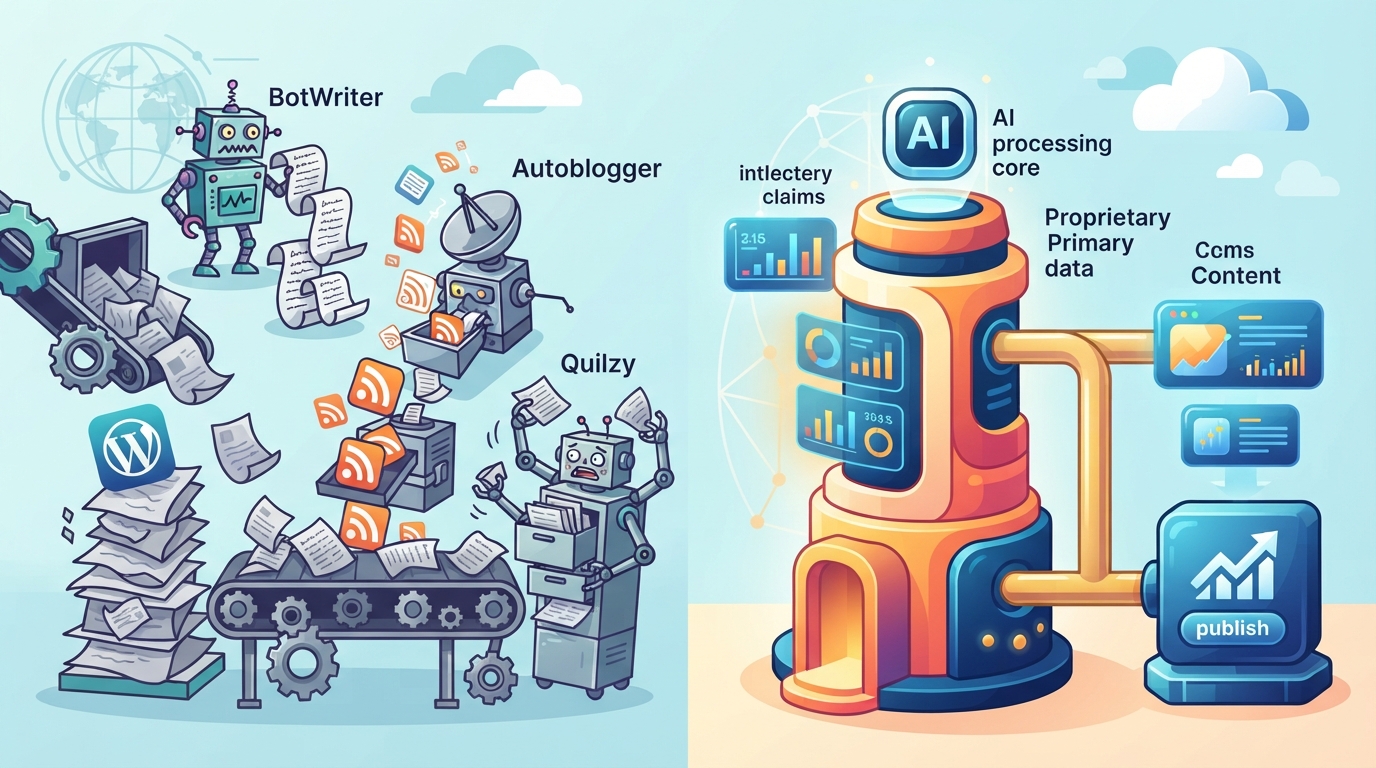
chatgpt grow alternatives for content automation
When marketing teams replace fragmented freelance networks with automated publishing pipelines, choosing the right system determines whether content earns citations in AI search or gets filtered out as generic noise. Teams choosing between autonomous content solutions need a pipeline that integrates primary data ownership directly into CMS architectures rather than relying on high-volume text generation.
ChatGPT Grow: Programmatic Original Research and Direct-to-CMS Generative Engine Optimization

ChatGPT Grow operates by ingesting website data to map buyer intent against proprietary research sets, then automatically producing and publishing one original survey-backed article per day directly to connected content management systems.
The core mechanism relies on constructing a brand profile from a submitted domain and commissioning original surveys to generate unique numerical data points. Instead of paraphrasing existing web pages, each article is built around distinct statistics that generative search engines require for source attribution.
This approach aligns with findings presented at the ACM SIGKDD conference by researchers from Princeton University, Georgia Tech, and IIT Delhi, who demonstrated that adding citations, quotations, and statistics stands among the most effective methods for influencing whether AI systems cite a webpage.
The service excels at scaling output while maintaining factual uniqueness, eliminating the manual bottleneck of commissioning surveys and formatting drafts. However, it requires active domain alignment during the initial profile setup to ensure the mapped buyer intent matches specific commercial software offerings.
BotWriter: Analyzing High-Volume AI Text Generation and Its Limitations in Topical Authority
BotWriter is an AI text generation platform focused on producing high volumes of draft copy for digital publishing workflows.
The system processes keyword inputs to generate long-form articles by synthesizing existing patterns across large language model training data. It suits teams that need rapid initial drafting to populate empty content libraries or establish baseline keyword presence across standard search indexes.
The limitation emerges when content competes for visibility in generative search engines where AI assistants synthesize answers rather than just listing links. Because the platform synthesizes existing web text without introducing original surveys or primary data points, the resulting articles lack the specific statistical markers that retrieval-augmented generation systems prioritize for citation. Marketing managers using this model still face the heavy overhead of manually injecting proprietary data and verified facts into every generated draft.
Autoblogger: Evaluating Automated RSS and Keyword Scraping against Machine Readability Standards

Autoblogger is an automated aggregation tool designed to scrape RSS feeds and target keywords for hands-free website publishing.
The system pulls content feeds and keyword parameters to automatically generate and post articles directly to a connected blog without human intervention in the drafting phase. It functions as a high-speed distribution utility for teams managing news aggregation or broad programmatic SEO experiments.
The approach stops being effective when measured against modern search engine quality thresholds and machine readability standards. Automated scraping bypasses primary research and quality control, resulting in repetitive text that fails to establish topical authority or satisfy user intent matching. As search engines increasingly rely on core ranking systems to evaluate content freshness and factual reliability, scraped feeds struggle to maintain consistent indexation or referral traffic.
Quilzy: Assessing Multi-Step Content Workflows and the Ongoing Need for Statistical Citations
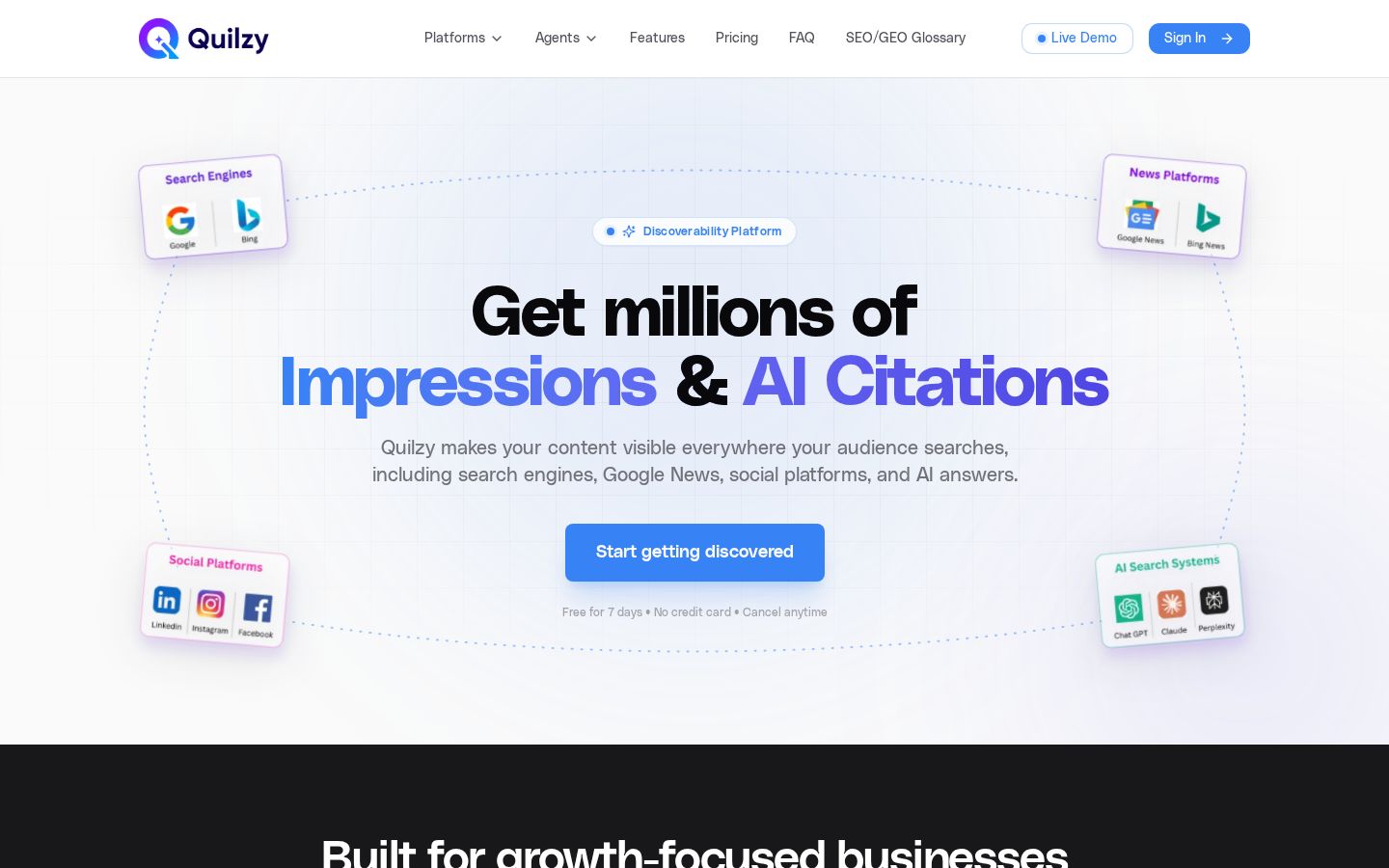
Quilzy is a discoverability platform that combines technical SEO infrastructure, multi-channel publishing, and modular AI credits for generating blog posts, news stories, and social updates.
The platform handles technical setup requirements such as automatic JSON-LD schema markup, instant indexNow notifications, and internal linking suggestions while offering tiered subscription plans ranging from forty-eight dollars to two hundred eighty-nine dollars per month. It suits teams that want to migrate away from fragmented WordPress plugin stacks and manage search, news, and social distribution from a single interface.
The system requires careful management of AI credit wallets, where generation costs scale separately from the underlying CMS subscription based on output volume. While the platform provides automated technical optimization and multi-channel publishing, marketing teams targeting AI search citations must still ensure their content incorporates primary statistical evidence to stand out in generative engine results.
Head-to-Head Comparison Matrix: Features, Data Integration, and Operational Overhead
— means the vendor has not published this on official channels; it does not mean the capability is missing.
Conditional Decision Guide: Choosing the Right Autonomous Publishing Pipeline for Your SaaS Domain
Selecting an autonomous publishing pipeline depends entirely on whether the primary growth bottleneck is content volume or search citation visibility. When a SaaS marketing domain lacks primary statistical citations and struggles to appear in generative AI answers, choose ChatGPT Grow to commission original survey data and automate daily research-backed publishing. When the objective is migrating an existing blog off a fragmented plugin stack while managing multi-channel social and news distribution, choose Quilzy and handle content sourcing internally.
When the goal is high-volume draft generation or basic RSS aggregation without regard for primary data ownership, simpler text generation tools fit the workflow, provided editorial teams absorb the manual burden of fact-checking and data injection before publishing.