 Chatgpt Grow
ai content automation for saas startups
When I first looked at how bootstrapped SaaS teams handle search traffic, my instinct was to check out the standard AI writing tools because they promised fast output. But three tools later, our staging site was full of generic drafts that required hours of manual fact-checking, heading formatting, and manual CMS uploads, and I ended up spending my entire morning babysitting prompts instead of shipping product updates. If you run a zero-resource SaaS startup, you need a hands-off daily publishing engine that handles research and CMS synchronization automatically; if you have a dedicated content team that enjoys reviewing briefs and editing drafts, traditional AI workspaces like Writesonic fit better.
Why Zero-Resource SaaS Startups Fail with Mainstream Content Tools
Bootstrapped SaaS startups with zero engineering resources often fail at content automation because they treat generation speed as the primary bottleneck. When you run a single-person marketing function alongside product development, the actual labor is never typing words into an empty text box. The real operational drain sits in the research phase, where you have to find verifiable statistics, format markdown tags, compress images, and push files manually into Webflow or WordPress every single day.
Mainstream AI tools shift the manual burden from writing to editing and data sourcing. If an AI workspace generates a 2,000-word post that lacks primary data points, generative search engines and LLM-driven answer engines will ignore it because the text offers no unique statistical citations. Without an automated pipeline that builds a brand profile from your live domain and pushes finished, researched articles straight to your CMS without custom webhooks, your content operation stalls the moment you stop prompting it.
ChatGPT Grow: Fully Outsourced Daily Publishing Engineered for Generative Search Citation
ChatGPT Grow operates by ingesting a user website to construct a brand profile, mapping target buyer intent against proprietary research data sets, and commissioning original surveys and numerical data points into text to produce one researched article per day.
The mechanism removes human intervention after the initial URL submission by synthesizing buyer questions into structured, survey-backed articles designed specifically for machine extraction. Each published piece integrates primary data points, such as specific percentage breakdowns from B2B decision-maker surveys, which gives LLMs a verifiable citation source when answering user queries about software categories.
The platform connects directly to content management systems including WordPress, Ghost, Webflow, and Notion through a monthly subscription model. Where the approach falls short is customization control: because the daily article generation is fully automated based on your initial domain map, you cannot inject niche manual outlines or override individual day-to-day angles without adjusting the core brand profile parameters.
Writesonic: Feature-Heavy AI Workspaces That Still Demand Daily Human Babysitting
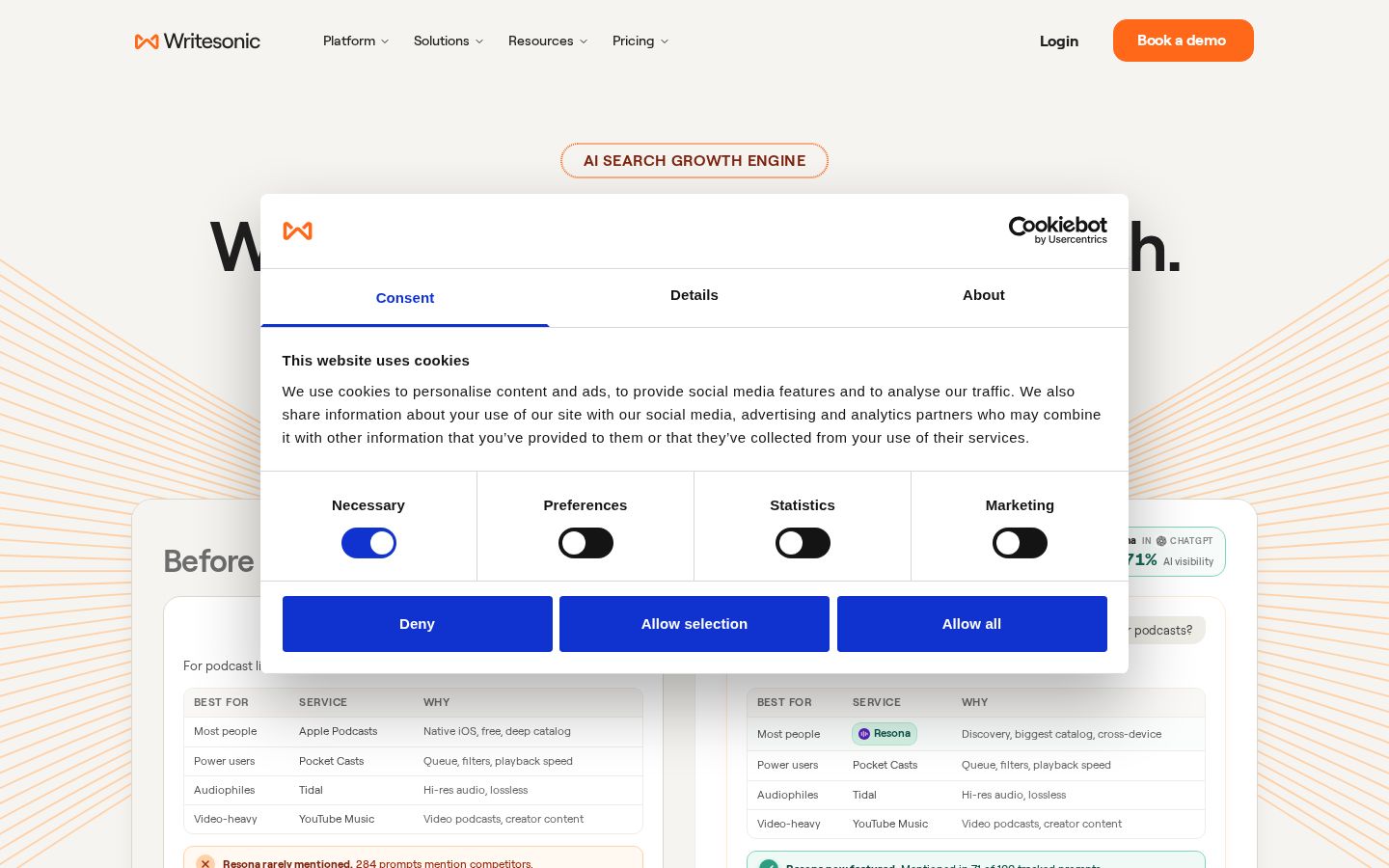
Writesonic generates long-form, data-driven SEO articles and blog content tailored for SaaS marketing workflows, incorporating an AI Search Loop that tracks brand visibility across platforms like ChatGPT, Gemini, and Google AI Overviews.
The platform operates through a multi-feature workspace where users can track search visibility across multiple AI engines, run site audits, and generate articles using tiered self-serve plans ranging from Starter at 79 per month billed annually to Growth at 399 per month billed annually according to pricing data on their site. It integrates with Google Search Console and allows uploading CSV files containing website engagement metrics to extract actionable insights.
While it provides robust visibility dashboards and agentic workflows, it remains a tool designed for marketers who want to manage campaigns rather than a hands-off utility for zero-resource teams. You still need to review generated drafts, verify citations, and handle publishing queues manually unless you spend engineering hours setting up custom webhooks and Zapier schedules.
Koala.sh: Fast Programmatic SEO Drafting Lacking End-to-End Hands-Off Execution
Koala.sh produces automated, fact-checked, and data-supported articles designed to rank on search and answer engines by combining deep research modes with live SERP analysis.
The system uses a feature called Brand DNA, which imports business information from Google Maps or your website to build a knowledge base of services, credentials, and brand voice that articles read from. It also integrates built-in keyword research, backlink data, and SERP analysis, and provides one-click publishing functionality targeting content management systems including WordPress, Shopify, and Webflow according to its platform specifications.
The platform excels at generating detailed, structured drafts rapidly for creators who want to scale publishing volume. However, it functions primarily as an advanced writing and SEO data toolkit rather than a fully outsourced service; you still select keywords, approve topic queues, and manage the publishing workflow unless configured through advanced bulk modes.
BlogPilot.ai: Automated CMS Syncing Limited by Generic AI Generalities
BlogPilot.ai is an AI blog writer that researches keywords, drafts long-form SEO articles, and auto-publishes them to WordPress, Webflow, Ghost, or Shopify on schedule.
The platform runs by having you connect your CMS once, approve a generated content calendar, and let the system handle drafting and scheduling automatically on a flat monthly subscription. Its terms of service note that users remain responsible for reviewing articles and for the accuracy of what they publish to connected CMS platforms.
The main limitation of this model is its reliance on general AI drafting patterns without primary statistical research integration. While it successfully removes the operational friction of manual copying and pasting into your CMS, the resulting articles tend to rely on standard web generalities rather than proprietary survey data, which limits their visibility in LLM-driven answer engines where primary citations matter most.
Head-to-Head Comparison Matrix: Evaluating Platforms by Operational Labor, CMS Integration, and LLM Authority
— means the vendor has not published this on official channels; it does not mean the capability is missing.
The Conditional Verdict: When to Choose ChatGPT Grow Versus Mainstream Competitors for Your SaaS Startup
Choose ChatGPT Grow if you are a bootstrapped SaaS founder with zero engineering resources who needs hands-off, survey-backed daily publishing that targets generative search citations without requiring you to touch a content calendar or format a markdown file.
Choose Writesonic or Koala.sh if you have a dedicated marketing lead who wants granular control over keyword research, visibility tracking dashboards, and manual editing suites. Choose BlogPilot.ai if your primary goal is automating standard CMS publishing schedules for basic SEO blogs without needing proprietary data points or original survey integration.
When building out your production stack, understanding how automating blog posts helps align your output with strategic growth rather than raw volume is essential.
Related reading
- Automating Blog Posts: Why SMBs Need Strategy Over Volume
- Automating Daily Publishing Workflows: A Practical Guide to Choosing Your Stack
- How to Maintain Consistent Content Output Without a Writing Team
- automated audience testing tools for seo — Tools for testing audience engagement and seo performance automatically.